During my Sunday’s newspaper reading session, my attention was caught by a statement in l’express dimanche from Shyam Roy, CEO of Emtel a Mauritian telco operator. He explained that in this century, digital will be to the economy what fuel was to the 1900’s, that is a catalyst for development. I immediately connected this to recent statements from two of the most prominent thought leaders in technology: Bill Gates and Eric Schimdt. I then started connecting the dots and tried to take a step back to humbly visualise what it was outlining.
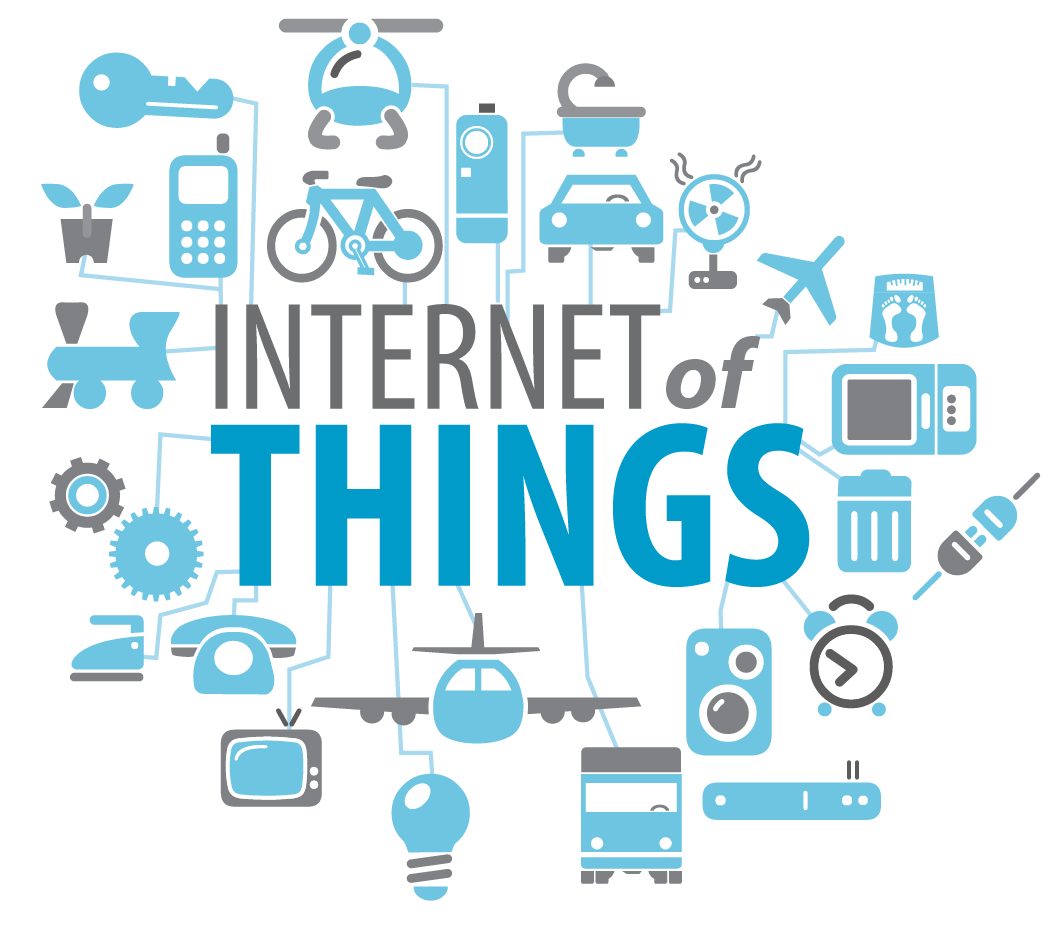
What Google’s chairman said at the World Economic Forum in Davos, has undoubtedly provoked some eyebrows frowning from geeks or jubilations from internet sceptics. The latters might have been disappointed when they understood what he really meant. Schmidt actually reaffirmed and projected the vision that many technology industry leaders have, the emergence of the Internet of Things, a world where every objects, devices, electrical appliances are smart and connected to the Internet. This would result in an information rich environment where all relevant information you need will be readily available when and where you need it, not in an overwhelming way but in a more productive way.
The concept of productivity here is different from what just came to your mind, this is how Microsoft describes it: “Helping people make the most of the moments that matter to them. Any moment, at work, home or on the move”
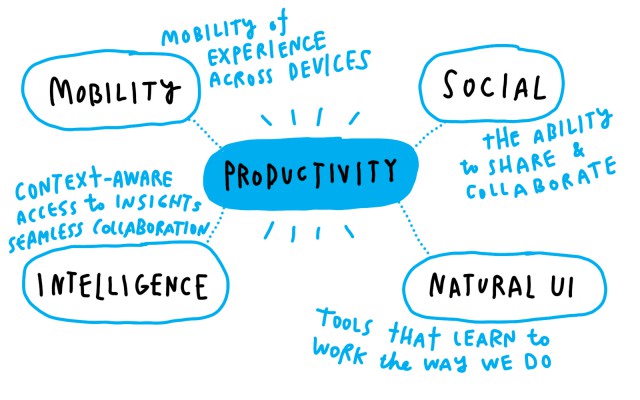
Imagine you are at the grocery shop and by opening an application on your phone you find a full shopping list of what is missing in your fridge or your cupboards at home. According to Schmidt this will be so transparent that you won’t even notice that it is all around you and you will be less and less consciously browsing the web as the information will come to you where and when you need it.
This hyper connected world already exists, probably in its infancy stage, and it is growing. According to a study published by the Acquity Group last year, 69% of the consumers in the U.S. are planning to buy an in-home device by 2019. But let’s be clear this is a reality for the developed world, mainly in the EU and the US. What about the underdeveloped and developing worlds? Will the tech industry and the governments be able to eliminate the global digital divide between the West and the rest?
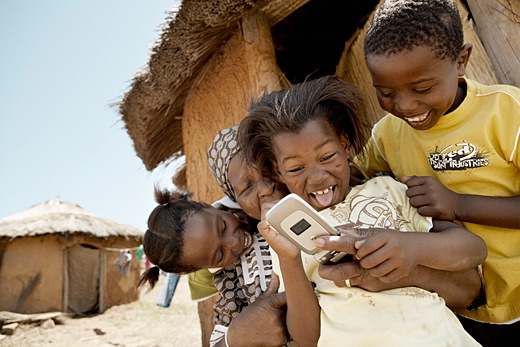
For the purpose of our reflection here let’s focus on Africa, a continent where only a quarter of its population has access to the Internet. However the continent is a land of opportunity as Sub-Saharan Africa is showing a 32% growth of its internet penetration rate. It is strongly positioning itself as the “Mobile Continent”, Ericsson’s Mobility report for Sub-Saharan Africa (2014) forecasts a twenty fold growth in mobile data traffic between 2013 and 2019. In the light of these strong data points it’s undeniable that Africa and its growing middle class represents a huge potential for the growth of digital, but this opportunity needs to be evaluated while considering Africa’s uniqueness made of various challenges and opportunities.
This African uniqueness has already initiated a number of innovative projects that gives lots of sense and importance to the growth of technology usage in many parts of the continent. In fact, Kenya has lead the way since 2007 with its mobile money system M-Pesa developed by Vodafone for the local telco Safaricom and Vodacom. According to Fortune Magazine in 2013 M-Pesa transactions represented 60 percent of Kenya’s gross domestic product while the Economist talks of 25 percent of it’s gross national product. M-Pesa has now been brought to other shores in Africa, Asia and Eastern Europe and as Bill Gates tweeted, this mobile banking service might make its way from the developing countries, where it was born out of lack of banking infrastructure, to the rich countries.
Here’s an innovation that I think will trickle up from developing countries to the rich world: http://t.co/2S1nBml6kg pic.twitter.com/Lrm9rQy6ks
— Bill Gates (@BillGates) January 31, 2015
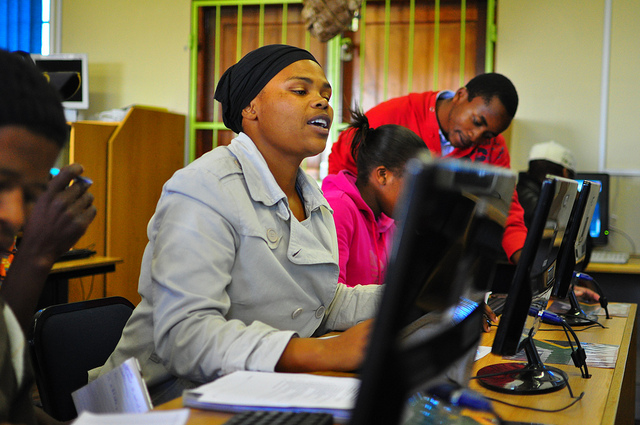
Another project that has emerged from the unique challenges or (should I say) opportunities of Africa is known as “White Spaces”. Access to broadband in many parts of Africa is a huge challenge for the development of digital activities due to the poor land line infrastructure. A group of researchers backed by Microsoft studied how TV white spaces, the unused portions of wireless spectrum in the frequency bands generally set aside for television transmissions, can be utilized for a range of applications such as providing low-cost connectivity and connecting rural areas to broadband. Through Microsoft’s 4Afrika program a number of trials were carried out on the continent and earlier this year the commercial pilot project was launched in Ghana with a daily cost of $0.61 for unlimited bandwidth per user with speeds between 0.5Mbps and 2Mbps. This service has been made available to Students at a remote Ghanaian college, Koforidua Polytechnic.
With the efforts of Governments, industry leaders and others the environment is favourable for innovation. As Erik Hersman posits in his essay, the pace of innovation and efficiency continues to accelerate in Africa with for example, more than 35 tech hubs in Africa (as of 2013) that welcomes start-up entrepreneurs, who are incubating, mentoring, and driving the digital ecosystem of Africa. One of the most renowned tech hubs in the region is Kenya’s iHub which counts over 16,500 members and 150 start-ups. This is how mobile apps like Daral, which helps to protect cattle from theft and monitoring their health in Senegal, and Matibabu developed by four young Ugandan students to detect Malaria.

Here are just very few examples to show that technology is developing in Africa by Africans for Africans and what is being done there is also happening in other parts of the world like South East Asia. Therefore the digital divide as we knew it in terms of access to technology and to the internet is disappearing very rapidly but the developed world is entering a new era of technological revolution with the Internet of Things and what we may call the Web 3.0. We may therefore move from a situation of global digital divide to one of digital differentiation. On one side the developed world with its hyper connected environment of Internet of Things and on the other end the developing world with its mobile connected environment where there will be disruptive innovations that will change the lives of people drastically. But make no mistake this will only be a transition phase and will there be a day where everyone will be playing at the same level?
This post was originally written for PAYC news.
 Ludovic Froget